Less is more, more or less
Today, with AI, it’s very easy to fall into the trap of producing more just because you can. Every idea, every new feature, every animation you’ve always wanted to build is just a couple of prompts away. It’s amazing. It feels like having a superpower.
Things that previously would’ve taken hours, days or weeks now take minutes. However, the longer I use these tools, the more conscious I become of how I use them and I keep wondering if leaning into quantity is really the best way to build.
Quality over quantity
Everyone knows the age-old saying of quality over quantity, but sometimes it’s difficult to understand exactly what it means in practice.
In the age of AI, more people can make more things, much faster. Quantity still matters and it always will, but more things being made doesn’t mean better things are being made.
I spend a lot of time (opens in a new tab) thinking about what quality means in software.
When you go from using a good product to a great one, you can feel the difference.
If you’re a domain expert, you can probably point to a lot of things that make the difference. Even then, it might be difficult to point your finger at all of them.
Usually it’s not a single thing but instead a collection of smaller decisions and details that add up to a great experience.
The products that stand out and last in the AI era are ones built with intent and extraordinary care.
Removing is harder than adding
Crucial parts of building a great product are simplicity and clarity.
Humans generally prefer simple and predictable things because, in a way, the brain is an energy-saving machine. Simplicity reduces unnecessary cognitive load, makes things easier to process and can make an experience feel less overwhelming.1
There’s a concept in psychology called processing fluency.2 The easier something is to process, the more familiar, pleasant or credible it can feel.
“Perfection is achieved, not when there is nothing more to add, but when there is nothing left to take away.”
AI makes adding things easier than it ever was. It’s very tempting and it’s much easier than removing something.
When you remove something, you have to be intentional and think all the implications through. Adding is different. With agents it’s easy to close your eyes, add things and hope for the best without thinking about it.
I love this quote by Jony Ive (opens in a new tab), because it describes exactly what simplicity is. It’s more than removing clutter. It’s having an understanding so deep that you make things make sense and you only keep what’s essential in order to do that.
“True simplicity is derived from so much more than just the absence of clutter and ornamentation. It’s about bringing order to complexity.”
Simplicity comes from understanding
You could let an agent run non-stop and produce millions of lines of code, but there is no guarantee that the result will be good.
The same applies to most things, for example, animations. In a weird way it actually became easier to animate things than not to.
The animated variant in the example below is nice, but does it make sense? Not really.
Switch tabs to compare the animated and non-animated variants.
Animating something and animating something well are two very different things.
In the example below, one context menu animates both when it opens and when it closes, while the other only animates when it closes.
One animates the background-color change of the items on hover, the other doesn’t.
Why is that? Isn’t more animation always better?
Notice the difference between what is animated and what is not between the two examples.
Not really. On paper it might sound like the more animated an interface is, the better, but in practice that’s rarely the case.
Let’s assume the context menu is the same context menu that appears when you right-click on macOS. It might seem like a good idea to animate both the entrance and exit. Why wouldn’t it be?
When you understand that people perform this action hundreds, sometimes thousands, of times per day, it stops looking like such a good idea.
Assuming you open the menu 200 times per day and the duration of the animation is 300ms, that’s about a minute per day or more than 6 hours per year spent watching the animation play out. It gets in the way and becomes annoying.
This example might be obvious. Of course you wouldn’t animate something that is used as much as a context menu, but that’s exactly the point.
Once you understand what you’re solving and how people use it, not animating it becomes the obvious decision.
Agents can’t do this just yet. They’re amazing at executing but they don’t fully possess understanding and judgment. And ultimately those are the things that make products feel great.
Making agents understand
A lot of the same ideas apply to engineering. Now that everyone can write a lot of code, the days when the quality of an engineer’s output was determined by the amount of code they produced are long gone.
At Interfere (opens in a new tab) for example, we celebrate pull requests that do what they’re supposed to with as little code as possible.

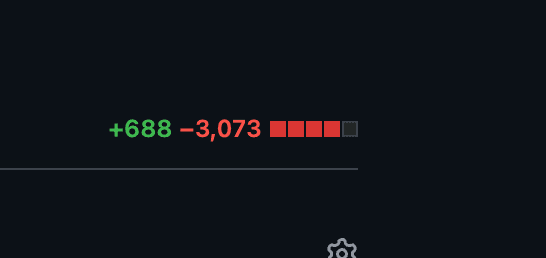
In the same way that judgment and understanding are becoming more valuable in design, they’re becoming more valuable in engineering too.
The ability to review code, distinguish good code from bad code and think critically is becoming more important than the ability to write code, but also more scarce.
If you lack knowledge and understanding and you skip ahead straight to building, it becomes much harder to judge whether the agent’s output is good or bad and therefore steer it to something good.
Our quality bar for everything is very high and each engineer at Interfere is incredible at something different.
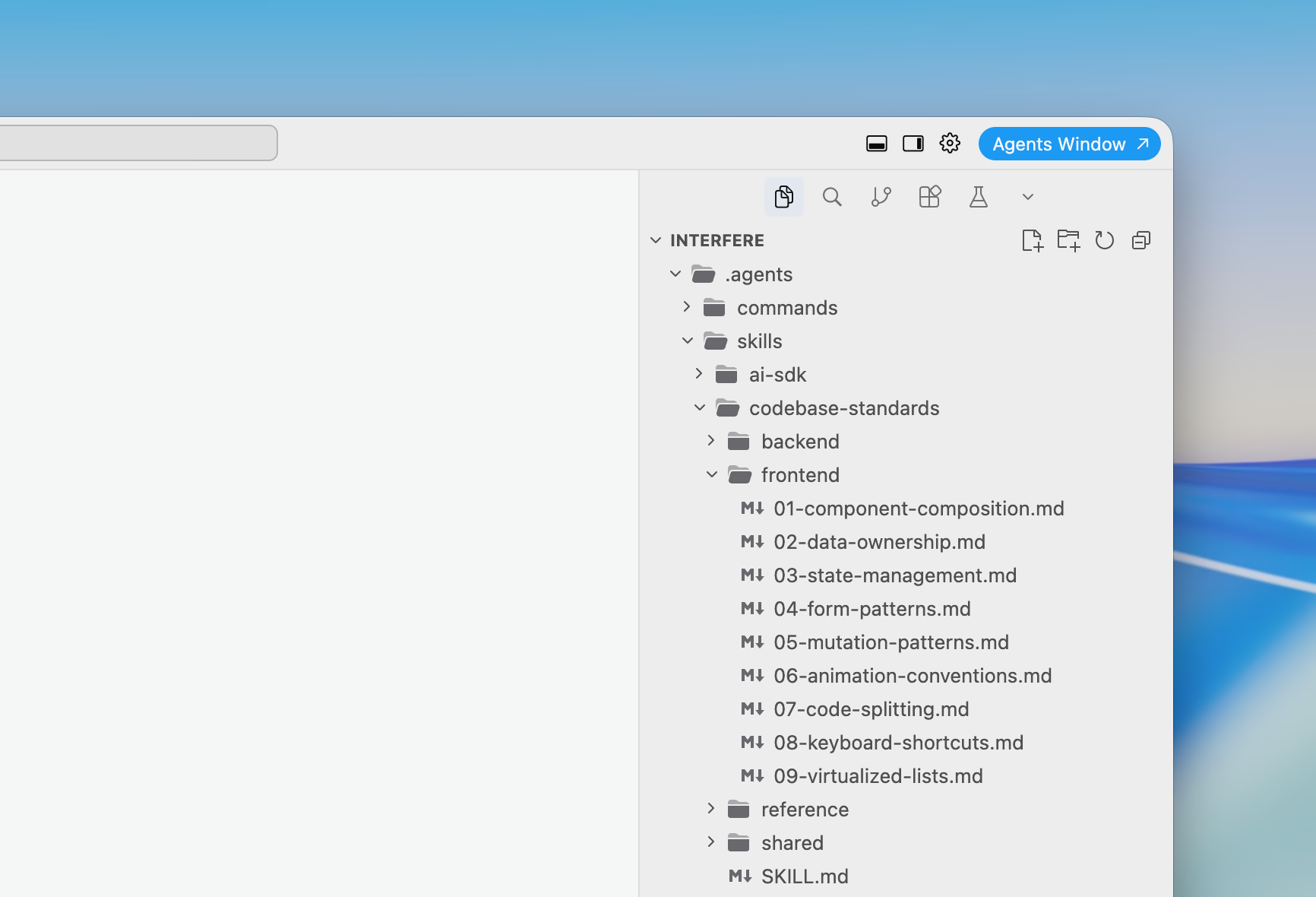
To maintain the quality bar and to share the knowledge and principles that we want both agents and humans to follow, we created our own /codebase-standards skill.
We pair it with an /interfere-review command that reviews code against them. By doing this, we try to encode our understanding and judgment in a way both teammates and agents can use.
Principles of working with agents
I put together a short list of things that I generally follow when working with agents.
- -Don’t outsource your thinking.
- -Be critical. Don’t assume anything AI makes is automatically the right solution.
- -Think about whether everything you’re adding actually makes the final outcome better.
- -Agents are an extension of you. The better you are at something, the better they are too.
- -Give agents as much context as possible. Use skills, commands, MCPs and be opinionated about how you want them to do things.
- -Try to make sure you can explain what code added by agents actually does, at least broadly. Don’t just blindly accept every change.
- -If you don’t understand something, use AI to explain. It’s the most powerful learning tool there is.
Conclusion
AI makes it easier than ever to add more. More features, more code, more animations, more everything. It’s incredibly powerful, but it also makes it easier to build things that perhaps don’t need to be built.
The question to answer these days seems to be what you should build and how you should build it instead of whether you can build it.
The more powerful the tools we use become, the more our understanding, judgment and taste3 matter.
Understanding the product, the user and the problem. Being opinionated. Having a vision. Calibrating your taste. Leaning on your judgment.
Those things are still on you.
Simplicity doesn’t happen by accident. It comes from an understanding deep enough that you know what to remove, what to leave alone and what not to build at all.
“Simplicity is the ultimate sophistication.”
The next time you’re adding an element, an animation or a feature, think critically about why you’re adding it and whether adding it makes the final outcome better.
In the age of AI, knowing what not to build might be the most important skill of all.
More often than not, less is more, more or less.
Thanks to Luke (opens in a new tab), Hana (opens in a new tab) and Tika (opens in a new tab) for proofreading this article and to Nacho (opens in a new tab), Alessandro (opens in a new tab) and other Interfaces subscribers for providing early feedback.
More
If you enjoy articles like this and want to learn more, take a look at Interfaces, my design engineering magazine.
It’s where I share everything I know about building great interfaces. From animation and typography to performance and accessibility.